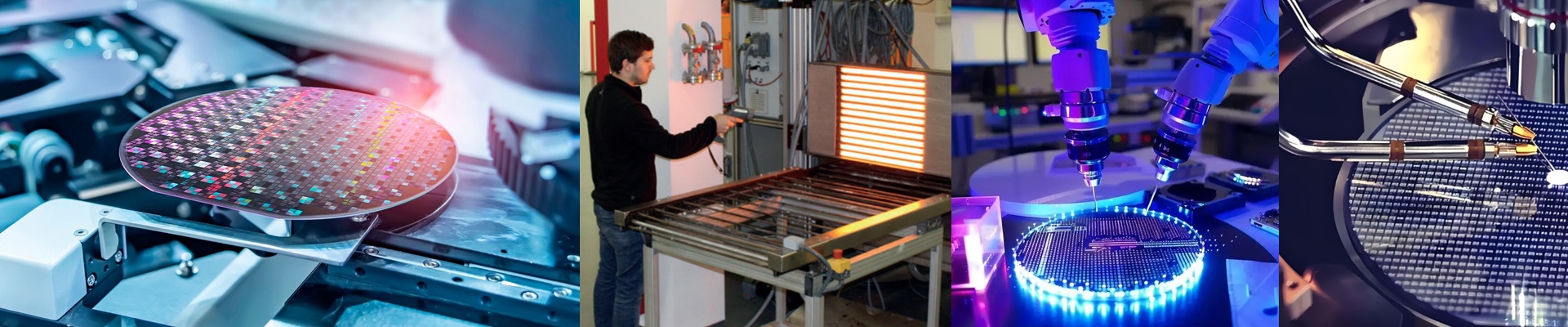
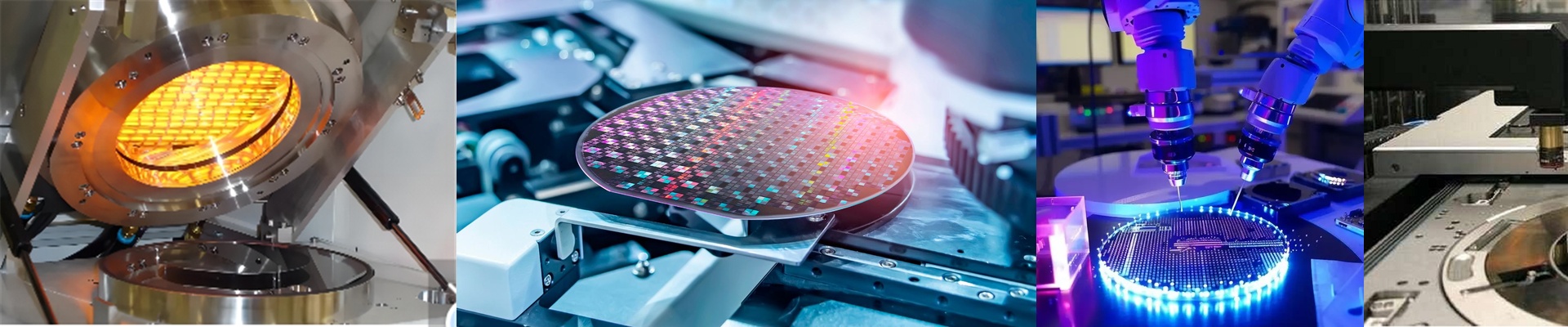



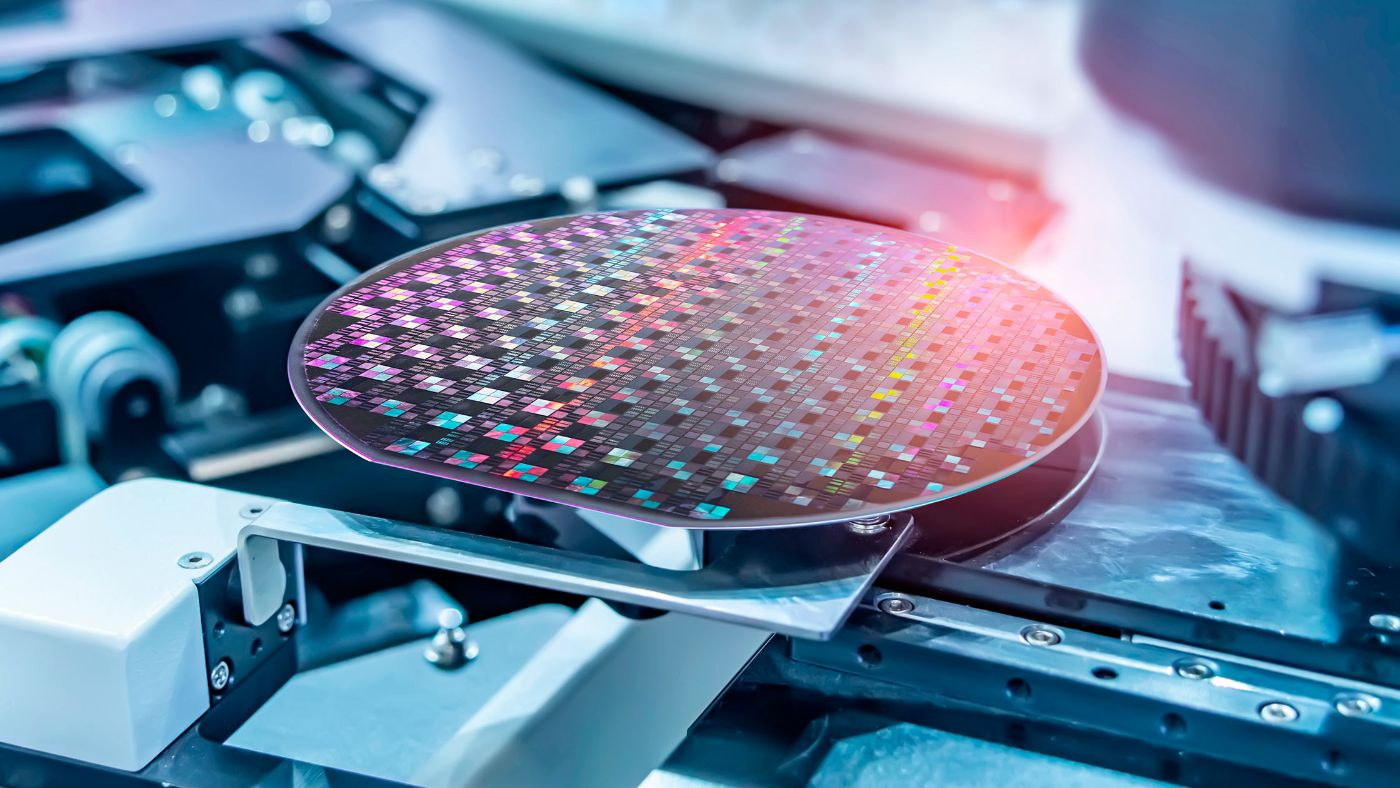
On the lithography floor, soft bake and hard bake don’t negotiate. Photoresist behaves the way the thermal budget tells it to—no exceptions. If the IR lamp is weak or inconsistent, you don’t get a do-over. You get line-width variation, scum, and scrap. You’re running 300 mm wafers through a tight loop—coat, bake, expose, develop. The thermal profile has to repeat, wafer to wafer, lot to lot. When the lamp housing runs hot, the setpoint drifts. When the sleeve transmits unevenly, the edge sees a different temperature than the center. The tool can compensate, but the process window gets squeezed. A quartz sleeve for fab IR lamps isn’t a consumable you tolerate. It’s the interface between your heat source and your photoresist. It sets uniformity, repeatability, and uptime.
What matters, technically
The sleeve sits right where optics, thermal engineering, and cleanroom reality meet. The specs are precise because the process is precise. **Material and transmission.**The sleeve is high-purity fused quartz, chosen for stable transmission in the short-wave and medium-wave infrared bands used by halogen and NIR lamps. Wall thickness is controlled to keep mechanical rigidity without cutting into the intended spectral window. The payoff is predictable heat delivery across the wafer, not a spectrum that shifts as the sleeve ages. **Thermal uniformity and stability.**In a production bake tool, “warm” isn’t the target. Repeatable temperature at the resist surface is. A well-executed sleeve design keeps wafer-level uniformity within ±0.1°C across the bake plate. That precision cuts down CD excursions and protects yield. Stability comes down to setpoint fidelity over time—no drift during long runs, no overshoot at startup. **Cleanroom compatibility and particle control.**The sleeve lives inside the process chamber, where Class 1–100 environments are standard. Surface finish and joint design are picked to minimize particle generation and prevent outgassing. The goal is simple: keep particle counts low enough you aren’t chasing micro-defects after bake. **Power, voltage, and mechanical fit.**The sleeve has to match the lamp power and voltage, and the geometry has to line up with the tool’s mounting and sealing interface. Output is repeatable only when the thermal path is treated as a complete system—lamp, sleeve, reflector, and sensor. If the sleeve is off by connector type, flange, or length, the bake profile can’t be controlled to spec. **Reliability under continuous operation.**Fab tools run 24/7. The sleeve has to survive thermal cycling at process temperatures without cracking, yellowing, or degrading output. We’ve seen units run 5,000+ hours with less than 5% output drop. That kind of stability keeps planned maintenance on schedule and prevents the kind of unplanned downtime that kills throughput.
Why this matters on the line
In wafer fabrication, the bake step is where thermal control becomes line control. **Photoresist soft bake and hard bake.**Soft bake removes solvents and sets adhesion; hard bake stabilizes the resist before exposure and development. In both, temperature accuracy isn’t academic—it’s directly tied to critical dimension control and defect levels. A sleeve that holds ±0.1°C across the wafer reduces the need to “tune” the recipe to compensate for tool drift. Process windows open up. Yield gets more predictable. **Lithography cluster integration.**The sleeve sits in the coat and bake modules that feed the scanner. When it performs consistently, the bake module spends less time recalibrating and more time processing wafers. You get more wafers per day without adding thermal-related excursions. **Wafer cleaning and drying support.**Even in cleaning tools that rely on controlled heating, the sleeve helps keep temperatures stable during final drying and surface conditioning. Thermal stability reduces sticking, reduces pattern collapse on high aspect ratio features, and keeps surface energy consistent across the wafer. **Semiconductor packaging lines.**In packaging, thermal profiles are broader, but repeatability is just as critical. The sleeve supports consistent heating during encapsulation prep and underfill curing, where temperature uniformity across the substrate cuts voiding risk and improves reliability. **Operating costs.**Stable output means the tool doesn’t have to over-drive the lamp to hit setpoint. Energy use drops. Lamp life extends because the sleeve maintains proper thermal coupling. Fewer replacements mean less spare inventory and less maintenance labor.
The practical details
A quartz sleeve is straightforward, but it’s not universal. **Match the tool, then verify the interface.**The sleeve has to align to your tool’s mounting geometry, sealing surface, and sensor location. Confirm connector type, flange orientation, and overall length. A mismatch shows up fast—hot spots, poor control, and premature failure. **Handle it with discipline.**Quartz is stable, but it’s brittle. Install with clean gloves and use the tool’s specified torque on fasteners. Keep oils and residues off it—those can create hot spots or contamination. In the cleanroom, handling is part of the process. **Respect thermal shock.**Rapid temperature changes stress quartz. Follow the tool’s ramp rates. Don’t jump from idle to full power without letting the sleeve and lamp stabilize. The quickest way to crack a sleeve isn’t time—it’s thermal shock. **Stick to the maintenance cadence.**Even with strong particle control, inspect the sleeve on a set schedule. Look for discoloration, etching, and micro-cracks. Replace based on measured output stability and visual condition. That discipline keeps the process in control and keeps surprises out of the shift. If your line depends on photoresist bake, you can’t treat the IR sleeve as an afterthought. It’s the component that keeps temperature honest, repeatable, and clean. When it’s right, the tool runs. When it’s wrong, the process fights you—every shift. We build our quartz sleeves for the fab: stable transmission, controlled uniformity, and cleanroom-ready construction. If your bake stations are drifting, if particle counts are creeping, if uptime is disappearing into maintenance, specify the sleeve that matches the process. Then run.