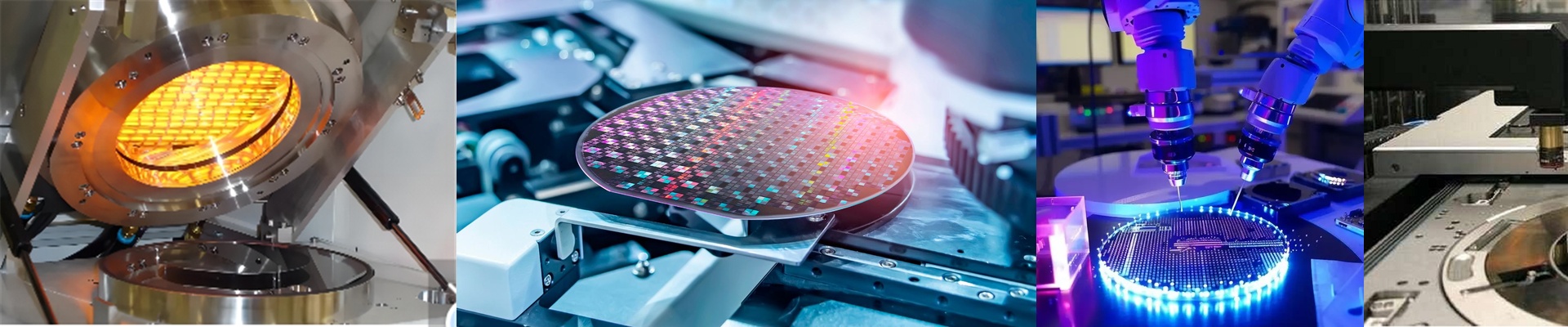
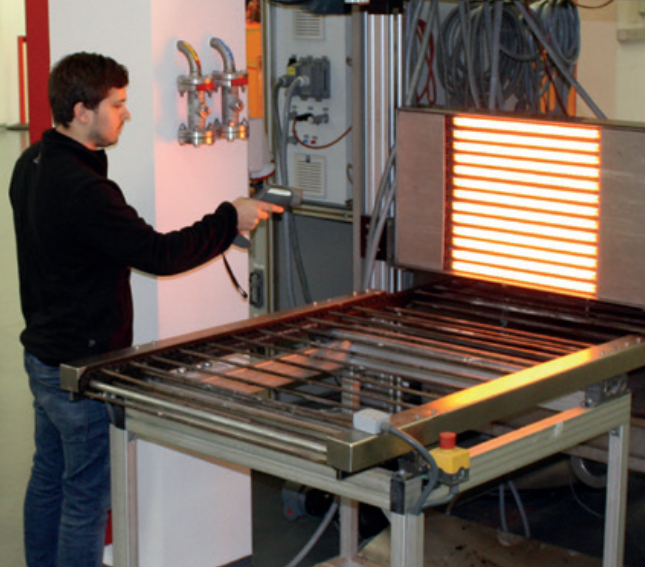
On the fab floor, thermal excursions during photoresist bake aren’t theoretical. They show up as linewidth variation and yield loss, plain and simple. Conventional hotplates fight to control ramps and can’t fix local non-uniformity, especially at the wafer edge. The NIR emitter bulb was built to close that gap, hitting the resist with direct, line-of-sight heat that evens out the thermal profile across the whole wafer. What matters, technically We tuned the near infrared emitter bulb to hit the photoresist thermal budget with wavelength control and tight uniformity. Across the chuck, you get ±0.1°C steady-state stability, and ramp control that responds in sub-seconds. The quartz envelope and engineered filament geometry keep particle generation and outgassing low, so cleanroom particle counts stay within Class 1–100. In practice, that means soft bake and hard bake profiles that repeat lot after lot, with consistent solvent evaporation and predictable crosslink behavior. Power density is set to match lithography-line throughput, and the form factor drops straight into standard lamp housings, with terminations built for 24/7 duty. Why it works in this process NIR heating couples efficiently into photoresist and substrate without contact, so thermal lag drops and you avoid edge roll-off. Cycle times come down, energy per wafer goes down, and you spend less time on maintenance interruptions. The zero-particle approach keeps critical surfaces clean during exposure and track integration, while the stable spectral output keeps photoresist sensitivity curves consistent. The payoff is predictable CD control and fewer reworks caused by bake-induced defects. What you need to keep straight NIR emitters demand precise optical alignment and a clean line-of-sight path — any obstruction and uniformity takes a hit. The system has to be set up with a calibrated pyrometer or thermal feedback loop that matches your process recipe, and the lamp housing needs to stay within the specified temperature and voltage windows. Commissioning is quick, and once you’re aligned, the process window stays tight, repeatable, and doesn’t drift when ambient conditions move around.